
MoT Exemption and Insurance Guidance for Classic Vehicles
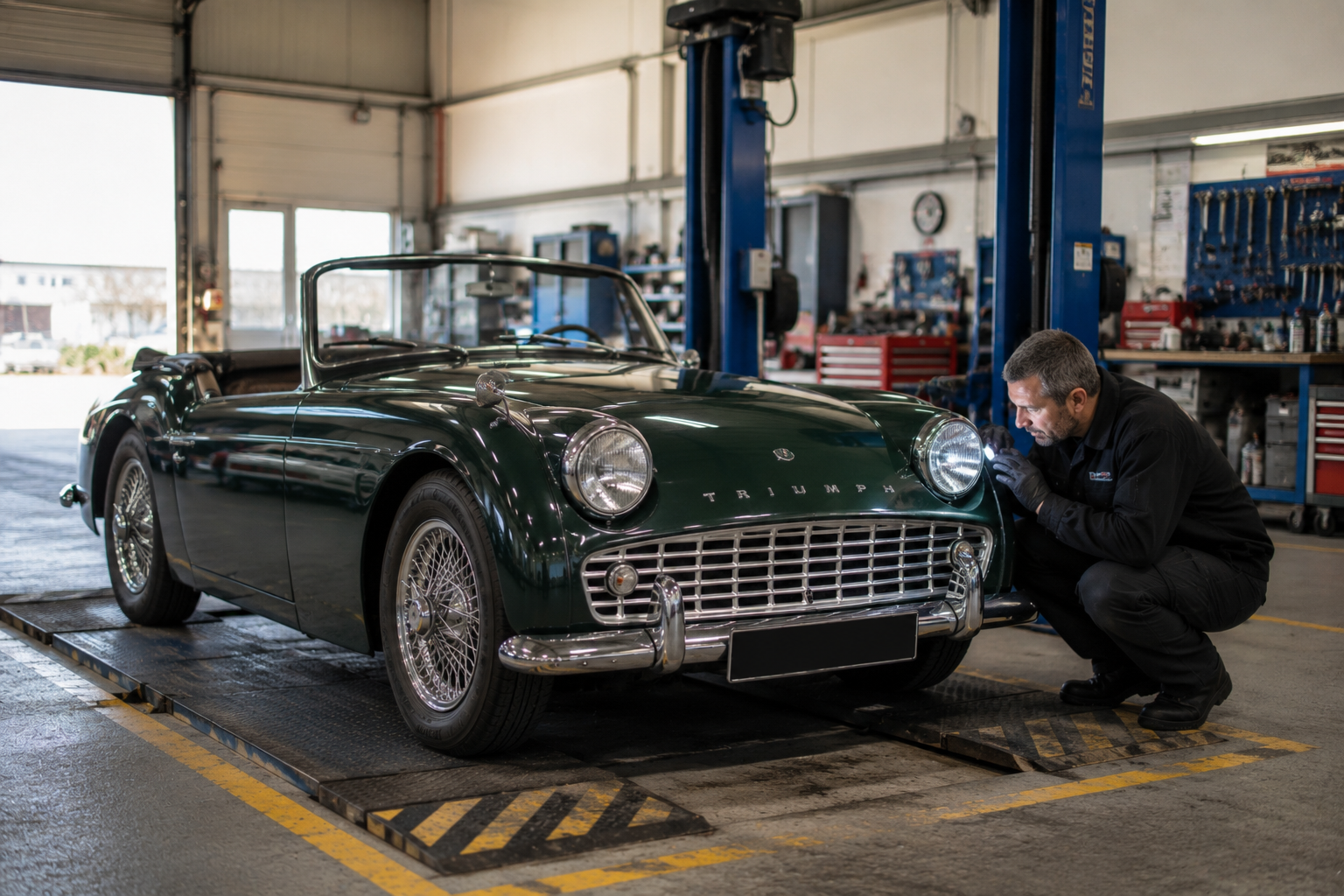
MoT Exemption and Insurance for Classic Cars: What Owners Should Know
MoT exemption for historic vehicles is something many classic car owners still have questions about. One of the most common concerns is whether not having a valid MoT certificate could affect insurance cover, agreed value arrangements, or the outcome of a future claim.
At Motor-Vision, we understand how much time, effort, and investment often goes into owning and maintaining a classic vehicle. For owners of eligible historic vehicles, the important point is that MoT exemption itself does not invalidate insurance cover, provided the vehicle remains roadworthy and complies with legal obligations.
Why some classic vehicles qualify for MoT exemption
The UK introduced a rolling 40-year exemption for qualifying historic vehicles in 2018. The decision followed discussions with organisations representing the classic vehicle sector, including the Federation of British Historic Vehicle Clubs, who highlighted the strong maintenance culture within the historic motoring community.
Many classic vehicles are carefully preserved, used only occasionally, and maintained to a very high standard by knowledgeable enthusiasts. In addition, some older vehicles feature engineering and design characteristics that do not fit easily within modern digital testing systems. Examples can include cable-operated brakes, trafficator indicators, or fly-off handbrakes commonly found on older models.
Vehicles that are more than 40 years old may qualify for exemption if they have not been substantially modified within the previous 30 years. Owners must register the vehicle as a Vehicle of Historic Interest and remain responsible for ensuring it is safe for use on public roads.
The exemption recognises that historic vehicles are generally not everyday transport and are often maintained with exceptional care.
Does the lack of an MoT certificate affect insurance?
For insurers, the crucial issue is roadworthiness rather than the presence of an MoT certificate itself.
An MoT confirms that a vehicle met the minimum legal standards at the point of testing. However, it does not guarantee the vehicle will remain roadworthy afterwards. Equally, a vehicle that qualifies for exemption is not automatically unsafe simply because it does not hold an MoT certificate.
Provided a historic vehicle is properly maintained and remains roadworthy, MoT exemption does not invalidate insurance cover.
The owner’s ongoing responsibility is to ensure the vehicle remains safe to drive whenever it is used on the road.
Does MoT exemption influence agreed value?
Some classic car owners are concerned that agreed value policies may be affected if a vehicle no longer undergoes annual MoT testing.
In practice, agreed value is generally based on factors such as the vehicle’s condition, rarity, originality, provenance, restoration quality, and market demand. Evidence commonly includes photographs, service history, specialist documentation, and owners’ club assessments.
The existence of an MoT certificate does not typically determine agreed value. The vehicle’s market value is based on its overall quality and desirability rather than whether it has undergone statutory testing.
Can insurers reject claims due to MoT exemption?
There is sometimes a perception that insurers may decline claims purely because a vehicle does not have an MoT certificate. In reality, this is uncommon.
Under UK legislation, insurers remain responsible for meeting third-party liabilities regardless of whether a vehicle holds a valid MoT certificate.
In certain circumstances, policy conditions may allow insurers to reduce or reject part of a claim if a vehicle is proven to have been unroadworthy and that defect directly contributed to the accident. This would usually require clear evidence linking a known defect to the incident itself.
For well-maintained historic vehicles, this situation is relatively rare.
Why voluntary testing still appeals to many enthusiasts
Although annual testing may no longer be legally required, many classic car owners still choose to arrange voluntary MoT tests, specialist inspections, or routine servicing.
Regular inspections can help identify gradual wear and tear before problems become more serious. Common issues identified during inspections often include:
ageing tyres with cracking rubber
worn suspension bushes or dampers
brake imbalance or deteriorating brake hoses
faulty lights or poor headlamp alignment
worn wiper blades affecting visibility
These are often gradual maintenance issues that can easily develop unnoticed over time.
Many enthusiasts value the reassurance provided by an independent inspection, particularly before longer journeys or seasonal use.
Supporting responsible classic vehicle ownership
At Motor-Vision, we appreciate the passion and commitment involved in preserving historic vehicles. In our experience, classic car owners are generally highly attentive when it comes to maintenance, storage, and careful use.
MoT exemption does not automatically affect insurance validity, agreed value, or claims handling. The key responsibility remains ensuring the vehicle is maintained in a safe and roadworthy condition at all times.
For many owners, voluntary inspections and regular servicing continue to offer valuable peace of mind while helping preserve these vehicles for years to come.
