
Five Spooky Movie Vehicles and the Real Machines Behind Them
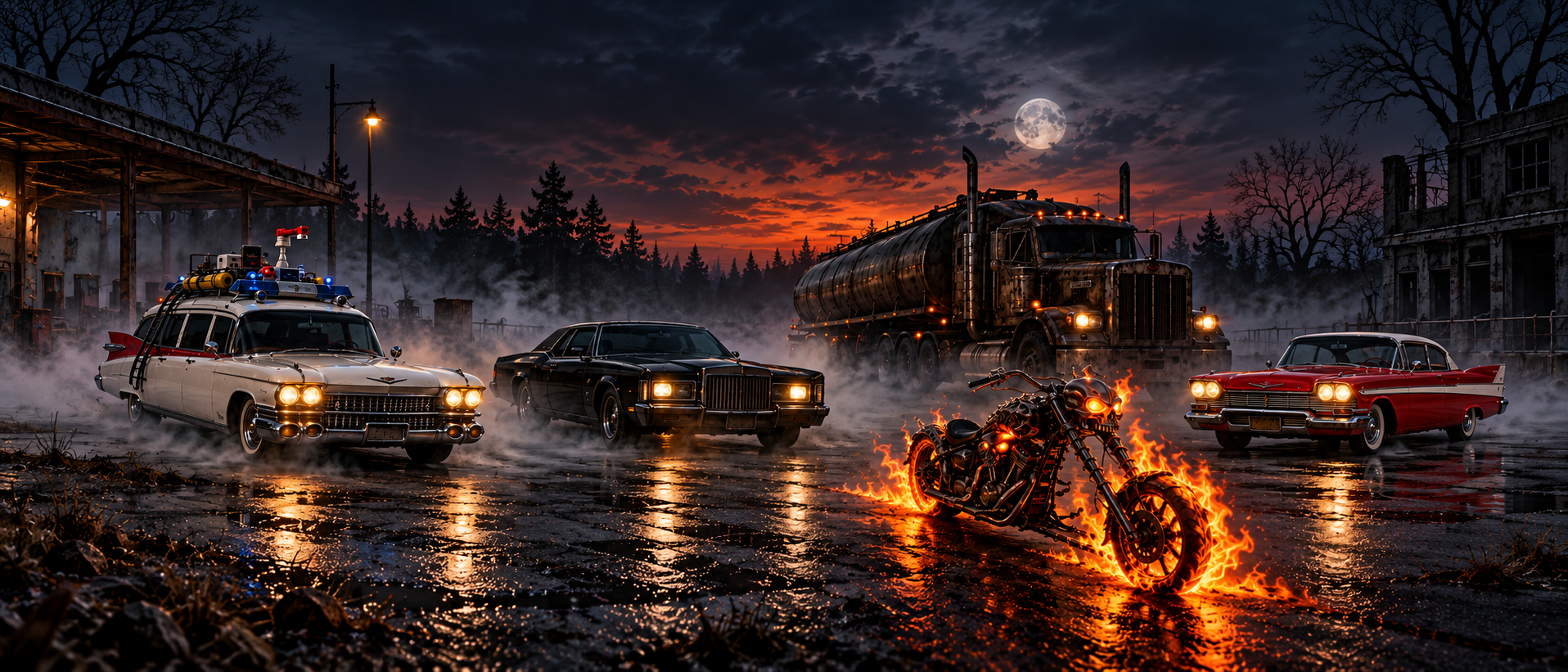
Five spooky vehicles from the movies
Some movie vehicles are famous because they are fast. Others because they are beautiful.
Then there are the ones that are memorable because they are genuinely unsettling.
From a ghost-hunting Cadillac and a heavily customised Lincoln to a flaming motorcycle and a tanker truck with a terrifying presence, cinema has a long history of turning vehicles into characters in their own right.
For Halloween, we’ve picked five of the most memorable spooky screen machines and looked at the real vehicles, modifications and filmmaking tricks behind them.
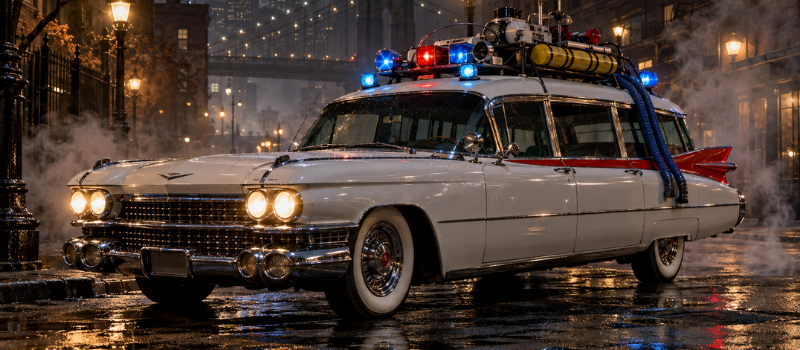
5. Ecto-1: the Cadillac ambulance in Ghostbusters (1984)
It is hard to think of many movie cars more instantly recognisable than Ecto-1.
The Ghostbusters’ famous transport started life as a 1959 Cadillac fitted with a Miller-Meteor ambulance body. Miller-Meteor was a coachbuilder that converted Cadillacs into specialist vehicles such as ambulances and hearses.
That gives Ecto-1 its unusual proportions.
Its long roofline and large rear compartment were originally designed for practical professional use, but they also made the car ideal for carrying the Ghostbusters and their huge collection of equipment.
The idea of using an old ambulance came from co-writer and star Dan Aykroyd.
Interestingly, his original concept looked far darker than the version that eventually appeared on screen. Early plans described a black vehicle with white and purple flashing lights.
The production instead developed the lighter car audiences know today, with red detailing, large fins and a roof full of fictional technology.
Hardware designer Steven Dane developed and supervised the conversion of the Cadillac into the Ectomobile.
Years later, when the original Ecto-1 underwent extensive restoration, Aykroyd was still able to explain what many of the imaginary pieces of equipment on its roof were supposedly designed to do.
The restorers had some rather more real-world issues to deal with.
Work was required on areas including the brakes, steering, suspension, wiring and fuel system.
Supernatural equipment may have been part of the story, but underneath it all Ecto-1 was still a classic Cadillac that needed maintaining.
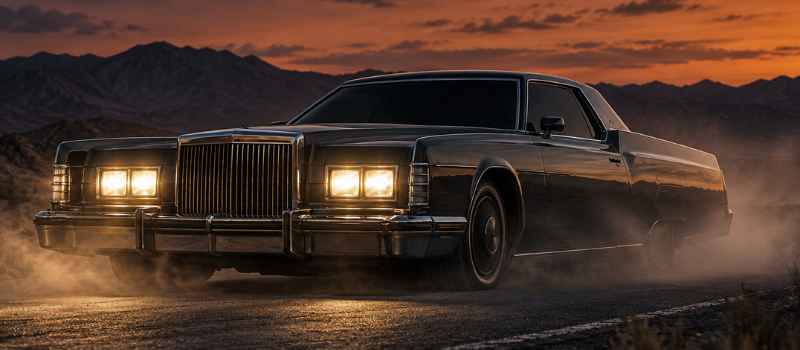
4. The customised Lincoln in The Car (1977)
The vehicle in The Car had one very clear purpose.
It needed to look evil.
The 1977 film used three heavily customised Lincoln Continental Mark III cars, created with the involvement of Hollywood car customiser George Barris and stunt coordinator Everett Creach.
Barris had already become famous for creating extraordinary screen vehicles, including the 1960s television Batmobile.
This project called for something much more sinister.
The production lowered the Lincoln’s roofline and raised its side panels to make the car appear unusually large and heavy.
It was then finished in a dark charcoal-grey colour.
The windows played an important role too.
They were treated so the stunt drivers could see out while the audience could not see in.
That meant viewers never had a clear human figure to associate with the vehicle’s actions.
Instead, the Lincoln could appear to move and act with a mind of its own.
According to the American Film Institute’s production history, each customised vehicle weighed 5,550lb, around 2.5 tonnes.
With that kind of mass and those exaggerated proportions, the car had little difficulty looking threatening.
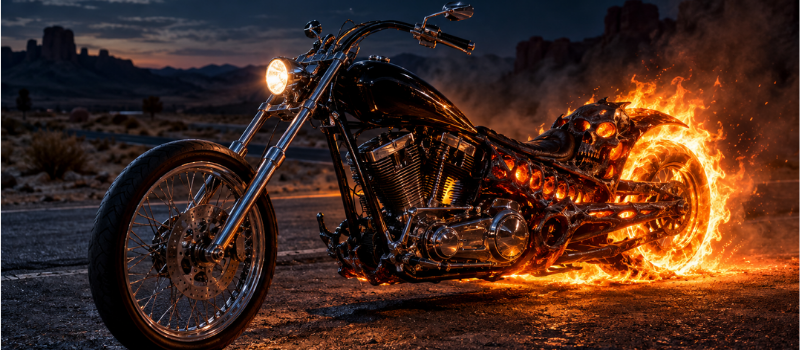
3. Grace and the Hell Cycle in Ghost Rider (2007)
For our third choice, four wheels become two.
In Ghost Rider, Nicolas Cage plays motorcycle stunt rider Johnny Blaze.
Before his supernatural transformation, Blaze rides a custom chopper known as Grace.
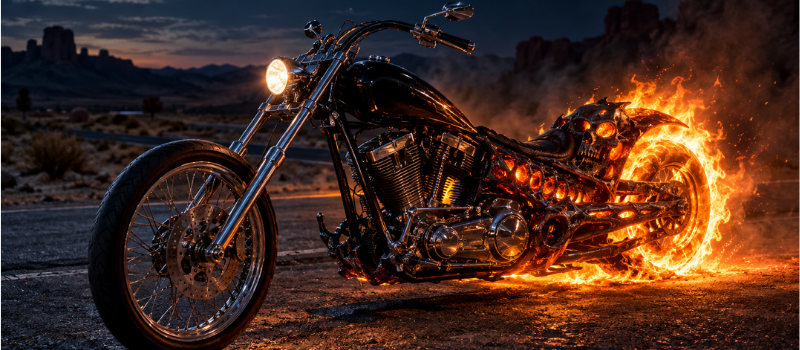
When he becomes Ghost Rider, the motorcycle transforms too, turning into the much more dramatic Hell Cycle.
Cage explained during filming that he rode Grace as well as a separate Buell stunt motorcycle.
The fiery Hell Cycle scenes relied on a combination of a physical bike design and visual effects.
That still left the filmmakers with an important challenge.
However fantastical the bike looked, it had to move like a real motorcycle.
Director Mark Steven Johnson said that several members of the visual-effects team were motorcycle riders themselves.
That knowledge helped them pay attention to details such as the way a motorcycle and rider lean when cornering.
It may seem like a minor detail in a film featuring a flaming supernatural motorcycle, but realistic movement helps make the impossible parts of the scene more convincing.
2. The tanker in Duel (1971)
The tanker in Steven Spielberg’s Duel is a very different type of screen vehicle.
It was not transformed with elaborate custom bodywork.
Spielberg simply found a truck that already looked menacing.
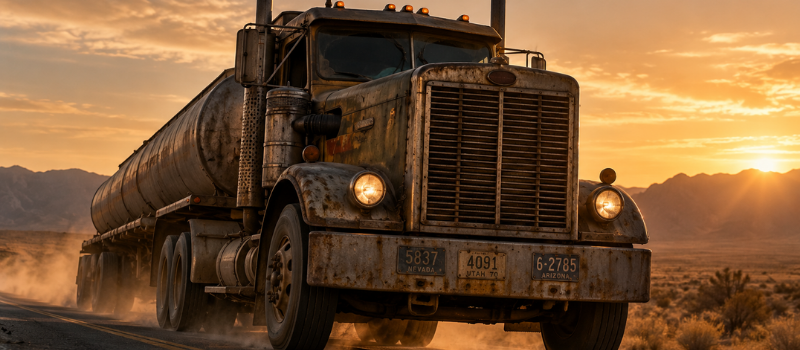
The vehicle was a Peterbilt 281 tanker, with a long bonnet, split windscreen, round headlights and a tall grille.
Spielberg effectively held a casting session for the part.
Several trucks were brought to the studio and he chose the Peterbilt because its older long-nosed shape looked more threatening than the flatter-fronted alternatives.
The production then exaggerated its road-worn appearance.
The truck was heavily dirtied and fitted with number plates from several different US states.
Spielberg later explained that those plates were intended to hint at earlier victims the tanker may have encountered during its travels.
It is an effective piece of visual storytelling because the film never needs to explain it directly.
The driver is treated in a similar way.
We occasionally see parts of him, including a hand and his boots, but never his face.
That decision, which Spielberg credited to Richard Matheson’s screenplay, helps turn the truck itself into the villain.
Spielberg later summed up the idea simply:
“The unseen is more frightening than what you throw in the audience’s face.”
Originally made for American television, Duel first aired in November 1971.
Its premise is remarkably simple: one motorist, one isolated road and a tanker that refuses to stop pursuing him.
That simplicity is part of what makes it so effective.
1. The Plymouth Fury in Christine (1983)
Our number-one choice is a car that begins the story as something many classic-car fans would happily own.
The title character in John Carpenter’s Christine is identified as a 1958 Plymouth Fury.
Its dramatic tailfins, broad grille and generous chrome already give the car plenty of visual presence.
Its distinctive red-and-white finish makes it even harder to ignore.
Based on Stephen King’s novel, the story follows teenager Arnie Cunningham, who finds the neglected Plymouth and decides to restore it.
As Christine’s condition improves, Arnie begins to change too.
What initially looks like an ordinary restoration project becomes something far more sinister.
One of the film’s most impressive moments comes when the damaged Plymouth appears to repair itself.
The effect did not rely on modern computer graphics.
Instead, the production team hollowed out a car and fitted hydraulic equipment inside the bodywork.
The hydraulics pulled the body panels inward, effectively crushing the car.
The footage was then played backwards.
On screen, the metal appears to push itself back into shape.
It is a clever practical effect and one that remains impressive decades later.
That helps Christine take the top spot on our list.
Ecto-1 turns an old ambulance into a paranormal response vehicle.
The Lincoln in The Car was physically reshaped to look more threatening.
The tanker in Duel proves the right vehicle can be frightening without dramatic modification.
And the Hell Cycle takes a custom motorcycle into completely supernatural territory.
Christine is different.
At first, she is simply a striking American classic being returned to her former glory.
Then you discover that perhaps this particular restoration should have been left unfinished.
So, one final warning for classic-car enthusiasts this Halloween: if your car starts repairing its own bodywork while you are not looking, it may be time to reconsider how attached you are becoming.
One final word of warning for classic-car enthusiasts this Halloween: admire the styling, enjoy the character and cherish the quirks, but perhaps be slightly suspicious if your car starts repairing itself...
Happy Halloween!
Sources and further reading
Ecto-1: Ecto-1: Resurrecting the Classic Car, which covers Dan Aykroyd’s roof equipment explanations and the restoration work. slashfilm.com
The Car: American Film Institute production history, including the three customised Lincolns, Barris and Creach, the windows and the 5,550-pound weight of each car.
Ghost Rider: Nicolas Cage’s set interview on Grace, the Buell and the Hell Cycle, plus director Mark Steven Johnson’s interview on the motorcycle-riding visual effects team.
Duel: Spielberg’s filmed interview transcript covers the truck casting call, number plates and unseen driver.
Christine: American Film Institute entry for the film and car, plus John Carpenter’s interview explaining the hydraulics and reversed footage. catalog.afi.com
