
Why Do Modern Cars Seem So Much Bigger Than Older Models?
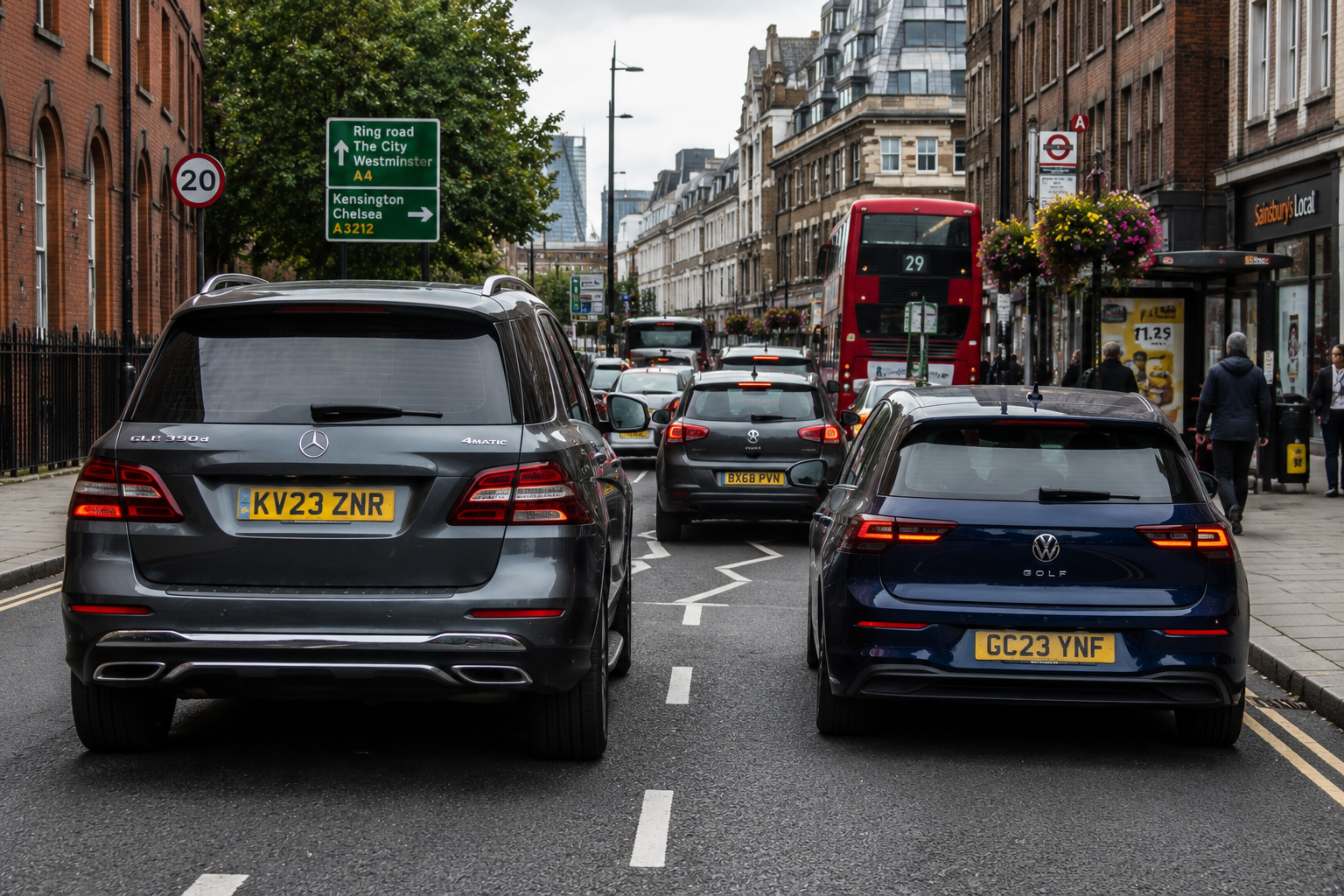
Spend enough time on Britain's roads and you'll occasionally spot a classic car among the stream of modern traffic.
It might be a Ford Cortina, an original Mini, a classic BMW or a well-preserved Alfa Romeo. While these cars often attract attention for their styling and character, another difference quickly becomes apparent.
They look small.
Vehicles that once served as spacious family transport now appear compact beside today's SUVs, crossovers and electric cars. Even large estate cars from previous decades can seem surprisingly narrow when parked next to modern vehicles.
So what has caused this steady increase in size?
The answer lies in decades of changing regulations, evolving customer expectations and advances in vehicle technology.
The Original Mini Versus the Modern MINI
One of the clearest examples of automotive growth can be seen by comparing the original Mini with today's MINI Hatch.
When Sir Alec Issigonis designed the original Mini, the goal was simple: maximise interior space while keeping external dimensions as small as possible.
The result was a car just over three metres long that weighed around 600kg, yet could comfortably carry four people.
Modern versions retain many of the visual elements that made the original famous, from the shape of the body to the distinctive headlights.
However, the dimensions tell a very different story.
Today's MINI is substantially longer, wider and heavier than the car that inspired it.
The same pattern can be seen across the industry.
Modern interpretations of iconic models such as the Fiat 500 and Renault 5 are considerably larger than their predecessors, reflecting the demands of contemporary vehicle design.
Modern Cars Have Become Bigger and Heavier
According to industry data and historical vehicle records, many current family cars are between 15% and 30% larger than equivalent models sold during the 1970s and 1980s.
Weight has increased just as dramatically.
Where a typical family hatchback once weighed under a tonne, many modern alternatives now weigh well over 1,300kg.
Electric vehicles can be heavier still because of their battery systems.
Consider these examples:
An original Mini typically weighed less than 650kg
A modern MINI Cooper can exceed 1,300kg
A Ford Cortina estate from the 1980s weighed around 1,100kg
Many modern SUVs now weigh over 1,800kg
The additional mass affects much more than vehicle dimensions. It can influence braking performance, tyre longevity and even the rate at which roads wear over time.
Why Have Cars Continued to Grow?
The increase in vehicle size is the result of several long-term trends rather than a single factor.
Better Protection for Occupants
Safety is perhaps the biggest reason modern cars are larger than older models.
Today's vehicles feature reinforced passenger cells, sophisticated crumple zones, side-impact structures, airbags and advanced electronic safety systems.
All of these components occupy space and contribute additional weight.
The result is a level of crash protection that would have been unimaginable in many vehicles built several decades ago.
Safety assessments from organisations such as Euro NCAP have also encouraged manufacturers to continually improve protection standards.
Drivers Expect More Comfort
Modern motorists expect a very different driving experience from previous generations.
Air conditioning, digital infotainment systems, premium sound insulation, electric adjustment systems and advanced driver-assistance technology are now common features.
Larger seats and more generous cabin space have also become priorities for many buyers.
At the same time, SUVs and crossovers have become increasingly popular because many drivers enjoy a higher seating position and the sense of space these vehicles provide.
The Influence of Electric Vehicles
Battery technology has introduced further challenges.
Even relatively compact electric cars carry substantial battery packs that can weigh hundreds of kilograms.
To package these systems effectively while maintaining practicality, manufacturers often design larger vehicle platforms.
Market Expectations
Over time, vehicle categories have gradually shifted upwards.
A supermini today often offers interior room comparable to a family hatchback from years gone by.
The rise of crossover models has also blurred the lines between traditional vehicle segments, reinforcing the perception that larger vehicles offer greater versatility and value.
Parking Spaces Haven't Kept Up
One area where vehicle growth has created obvious challenges is parking.
Many of Britain's multi-storey car parks were designed when vehicles were significantly smaller than they are today.
Parking bays, ramps and access routes often reflect the dimensions of cars from the 1950s, 1960s and 1970s.
The British Parking Association notes that some older parking bays measure around 2.3 metres wide.
By contrast, many modern vehicles approach or exceed two metres in width once mirrors are included.
This helps explain why squeezing into a tight parking space can sometimes feel more stressful than the journey itself.
Small Bumps, Bigger Repair Bills
Interestingly, modern cars are often more resilient when it comes to minor impacts.
Older vehicles relied heavily on exposed chrome bumpers that could easily dent, bend or corrode.
Modern bumper systems are designed to absorb low-speed impacts and minimise visible damage.
However, the technology hidden behind those bumpers tells a different story.
Many modern vehicles contain parking sensors, cameras, radar units and advanced driver-assistance systems positioned within body panels.
As a result, even a low-speed collision can damage expensive components or require specialist calibration work.
This increasing complexity is one of the reasons repair costs have risen significantly in recent years and why understanding modern vehicle technology has become increasingly important when choosing suitable insurance cover.
Looking Back at How Motoring Has Changed
The sight of older cars sharing the road with modern traffic highlights just how dramatically vehicle design has evolved.
Cars that once felt substantial now seem modest in comparison, despite often being perfectly practical by today's standards.
Meanwhile, drivers continue to ask for more luggage space, more comfort and more technology.
Perhaps the greatest contradiction is that while phones, televisions and many other consumer products have become smaller and lighter over time, cars have steadily moved in the opposite direction.
And somewhere in a decades-old multi-storey car park, a classic Cortina probably still has enough room to open its doors without worrying about scratching the car parked alongside it.
Motor-Vision Insurance understands that today's vehicles are more advanced than ever before, whether they're compact city cars, cherished classics or sophisticated electric SUVs. As vehicle technology continues to evolve, understanding these changes can help drivers make informed decisions about protecting their vehicles both on and off the road.
