
Keyless Car Theft: How to Reduce the Risk
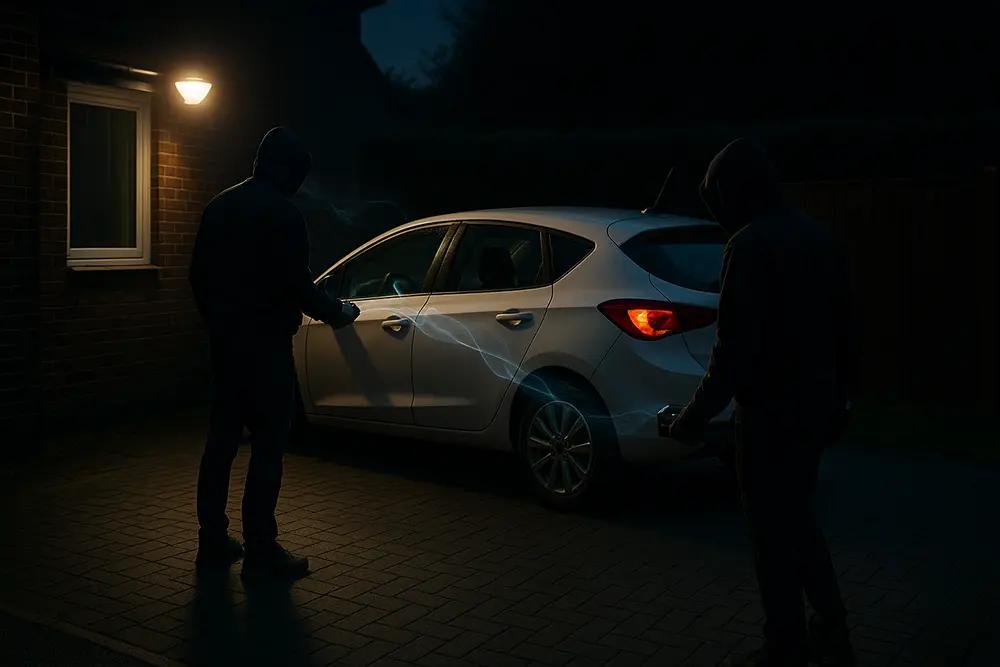
Modern vehicle security has changed quickly. Many cars now use electronic locking and start systems designed to make everyday driving more convenient — but criminals have also developed new ways to target them.
In some cases, a vehicle can be stolen without a window being broken, a lock being forced or the thief ever getting hold of the original key.
Relay attacks are one example, but they are not the only form of technology-assisted vehicle theft. Understanding how these methods work can help you decide which security measures are worth adding to your vehicle.
What Is Keyless Car Theft?
Vehicles can use different types of electronic locking system.
Some have passive keyless entry and start, where the vehicle detects the key fob nearby and allows the doors to open or the engine to start without the driver pressing a button.
Others use conventional remote central locking, where you actively press a button on the key fob.
A traditional relay attack primarily targets passive keyless systems.
Criminals use electronic equipment to extend or relay the communication between the genuine key fob and the vehicle. This can make the vehicle believe the key is nearby even when it is actually inside the owner's home.
On a vulnerable vehicle, this may allow the doors to be unlocked and the engine started without the thief ever possessing the original key.
Electronic Theft Isn't Limited to Relay Attacks
The terms "keyless theft" and "relay theft" are often used interchangeably, but they do not mean exactly the same thing.
Criminals may use other electronic methods to target modern vehicles, depending on the make, model and security system.
These can include attempts to interfere with remote locking signals, programme another key or exploit parts of the vehicle's diagnostic or electronic network.
For that reason, protecting the key signal is useful, but it should ideally form part of a broader vehicle-security strategy.
How Common Is Electronic Vehicle Theft?
Electronic methods remain an important feature of vehicle crime.
According to the Crime Survey for England and Wales, manipulation of a remote-locking signal was involved in 46.7% of thefts of vehicles in the year ending March 2025, making it the most frequently reported individual method recorded in the survey.
That does not mean every incident was a classic relay attack, and it does not mean every vehicle with electronic locking is equally vulnerable.
Vehicle offences overall also fell in the year ending March 2025, so it is important not to interpret the statistic as evidence that vehicle theft as a whole is increasing.
What it does show is that electronic security remains an important consideration for drivers.
How to Reduce the Risk of Keyless Car Theft
No single security measure can guarantee a vehicle will not be stolen, but combining several layers of protection can make it considerably harder to target.
1. Keep keys away from doors and windows
Avoid leaving your main key or spare key immediately inside the front door, close to a window or unnecessarily near the vehicle.
Increasing the distance between the key and the outside of the property can help reduce the opportunity for a relay attack.
2. Use a signal-blocking pouch
If your vehicle uses passive keyless entry, consider keeping the key in a suitable Faraday or signal-blocking pouch when it is not in use.
These are designed to prevent the key fob signal being captured and relayed.
Remember to protect spare keys too.
It is also worth checking the pouch periodically. Put the key inside it and try to open the car using the passive keyless function. If the vehicle still detects the key, the pouch may no longer be blocking the signal effectively.
3. Check whether the wireless function can be switched off
Some key fobs allow the wireless signal or keyless function to be disabled when the vehicle is not in use.
This varies between manufacturers and models, so check the handbook or speak to the manufacturer or dealership before changing any settings.
4. Add a visible physical deterrent
A steering wheel lock or pedal lock may seem low-tech, but that can be part of its value.
Even if a thief gains electronic access to the vehicle, a physical lock creates another obstacle before the vehicle can be driven away.
Visible deterrents can also make the vehicle less attractive to target in the first place.
5. Think about where you park
Where possible, park in a locked garage, behind secure gates or in a well-lit area.
If several vehicles are parked together, consider whether their positioning could make the most valuable or vulnerable vehicle harder to remove.
Motion-sensitive lighting and CCTV can provide additional deterrence, although neither should be relied upon as the only form of security.
6. Check that your car is actually locked
Don't simply walk away and assume the vehicle has locked.
Look for its normal visual confirmation, such as flashing lights or folding mirrors, and physically check the door where appropriate.
This can help protect against other techniques used to interfere with remote locking as well as keyless theft.
7. Consider additional security
Depending on your vehicle, you may want to consider an approved immobiliser, tracking system or other professionally installed security device.
If you add aftermarket security, make sure it is compatible with the vehicle and check whether your insurer has any requirements regarding the device or its installation.
What About Your Insurance?
Whether a theft is covered depends on the type of insurance you have and the terms, conditions and exclusions of your individual policy.
Comprehensive motor insurance will generally include theft cover, but some vehicles or policies may have specific security requirements.
This may be particularly relevant for higher-value, performance, modified or specialist vehicles.
Check your policy documents carefully and contact your insurer or broker if you are unsure whether any particular security measures are required.
Build Security in Layers
Modern vehicle theft can involve sophisticated technology, but protecting your car does not always require an equally complicated solution.
Signal protection, physical locks, sensible key storage and secure parking can all create additional barriers.
The aim is not to rely on one device or precaution, but to make the vehicle progressively harder and less attractive to steal.
Taking a few minutes to review your key storage, vehicle security and insurance requirements could help reduce the risk of an unpleasant surprise later.
Keyless Car Theft FAQs
What is a relay attack?
A relay attack is a form of vehicle theft that mainly targets cars with passive keyless entry and start. Electronic equipment is used to extend the communication between the genuine key fob and the vehicle, potentially making the car believe the key is nearby.
Can cars without passive keyless entry still be stolen electronically?
Yes. Relay attacks mainly relate to passive keyless systems, but other electronic theft methods can target vehicles with different types of remote locking and security technology.
Does a Faraday pouch stop keyless theft?
A properly functioning signal-blocking pouch can help prevent the key signal being captured during a relay attack. It cannot protect against every form of vehicle theft, so it is best used alongside other security measures.
Where should I keep my car keys at night?
Keep both your main and spare keys away from external doors and windows. If your vehicle has passive keyless entry, consider keeping them in a suitable signal-blocking pouch or container.
Are steering wheel locks still useful?
Yes. A steering wheel lock adds a physical barrier that must be overcome even if somebody manages to gain electronic access to the vehicle.
Can I switch keyless entry off?
Some vehicles and key fobs allow the wireless function to be disabled. The process varies by manufacturer and model, so check the vehicle handbook or manufacturer's guidance.
Does comprehensive car insurance cover keyless theft?
Comprehensive insurance will generally include theft cover, but policies are subject to their own terms, conditions and exclusions. Some vehicles may also have specific security requirements, so always check your policy documentation.
